State coverage
Washington Mobile Commercial Kitchen Trailer Rentals and Emergency Food Service
Emergency Commercial Mobile Kitchen Service rents mobile commercial kitchen trailers throughout Washington, with commercial dishwashing trailers and emergency refrigerated trailers as supporting services. Emergency food service for breakdowns, fires and floods is available alongside planned rentals for renovation and construction. Short-term and long-term rentals run from one week to monthly terms. Customers include government agencies, school districts and prisons. Our team coordinates delivery, placement and setup with your site contacts. Call or request a quote to check availability anywhere in Washington, from Spokane to Tacoma.
24/7 emergency line: (877) 416-7535
- Counties
- 39
- Cities and communities
- 238
- Largest covered place
- Seattle
- FEMA declarations (state)
- 220
Mobile commercial kitchen rental in Washington
When a permanent kitchen in Washington is closed for renovation, repairs or an equipment failure, a rented mobile commercial kitchen lets meal service continue from a trailer parked on site. A project that crosses into Spokane (about 230,609 residents) usually keeps one menu, one crew and one power plan, which is why the kitchen is chosen first.
Sizing starts with how many meals you serve. The 28ft Mobile Kitchen and 38ft Mobile Kitchen suit different kitchen volumes, and the 40ft Bulk Kitchen adds capacity for larger operations; compare their equipment lists and power needs before you choose.
Before delivery, confirm the pad, the electrical service, potable water and a wastewater route. Washington county health departments environmental health or the local health authority usually reviews a temporary kitchen, and their requirements vary, so involve them early. Mobile kitchens can be rented for one week or on monthly terms, including long-term leases for work that runs through a full construction season. Check the authority that covers the site itself; what cleared in Vancouver (Clark County) is no guarantee for Bellevue (King County).
Washington has 39 counties and 238 places covered on this site, from Seattle to small communities where the nearest restaurant is far away. The same trailers go to either, with delivery planned for the actual route.
Largest cities we cover in Washington
These 12 Washington places have the largest estimated populations among those covered. Each has its own page with local conditions, and every Washington city is listed in the full index.
- Seattle: about 780,995 residents
- Spokane: about 230,609 residents
- Tacoma: about 228,202 residents
- Vancouver: about 198,992 residents
- Bellevue: about 154,377 residents
- Kent: about 136,588 residents
- Everett: about 113,011 residents
- Spokane Valley: about 108,267 residents
- Renton: about 105,543 residents
- Federal Way: about 100,252 residents
- Yakima: about 97,390 residents
- Bellingham: about 95,860 residents
Source: U.S. Census Bureau Vintage 2024 population estimates and Gazetteer 2024.
Warewashing and cold storage across Washington
A kitchen is only half of food service. A dishwashing trailer such as the 38ft Low-Temp Conveyor Dishwashing Trailer (220V, single phase, 220A) handles trays, plates and pans so Washington kitchens do not fall back on disposables. Warewashing needs the same hot water and drain plan in Bellevue as it does here.
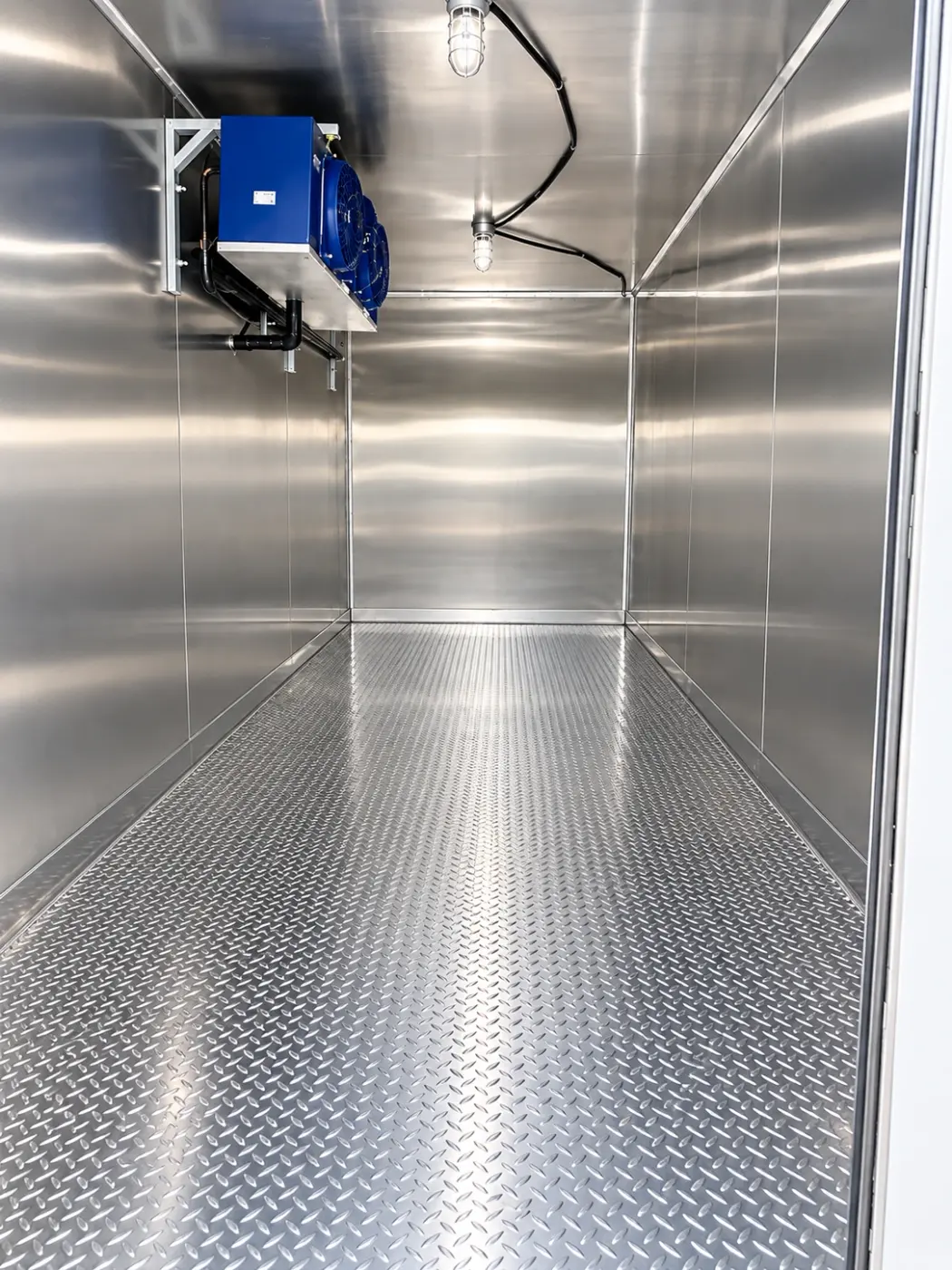
When a compressor quits, product loss follows within hours. Emergency refrigerated trailers, such as the 20ft Cooler Trailer, 32°F, are rented to restaurants, hotels, hospitals and institutions around Washington. In Kent, where King County has 33 federal declarations on record, the call for emergency refrigeration begins the same way.
Across Washington counties, NOAA's 1991 to 2020 normals average a January low of 28°F and a July high of 78°F, and the range between the coldest and warmest county is wide: Ferry County averages a 19°F January low, while Benton County averages a 90°F July high. A rental kitchen is planned for the county it will sit in, not for the state average: water-line heat in the cold ones, condenser airflow in the hot ones.
Industries we serve in Washington
Expect requests in Washington from government agencies, school districts, prisons and municipal agencies. A government facility kitchen rental is a typical first conversation, followed by questions about power, water and placement. Care homes in Everett and school kitchens in Spokane Valley, places of about 113,011 residents and about 108,267 residents, lose their lines for different reasons, but the rental that answers them is the same.
CMS lists 100 hospitals and 193 certified nursing homes with about 18,763 beds in Washington, and NCES counts 2,553 public schools enrolling about 1,093,718 students. Each of those kitchens has a closure date coming eventually: a renovation, a failed range, a flood.
- Government Facility Kitchen Rentals and Leasing: procurement timelines that need clear equipment and rental terms
- School Cafeteria Kitchen Rentals During Renovation: summer cafeteria renovations that run late
- Prison and Correctional Facility Kitchen Rentals: security requirements that affect delivery, staffing and placement
- Municipal and Public Institution Kitchen Trailer Rentals: senior-nutrition and community meal programs that cannot pause
Planning for Washington's emergency history
OpenFEMA lists 220 declared incidents in Washington since 1956. The leading types were wildfire (155), flooding (35) and severe storms (20).
Wildfire seasons bring evacuation zones, smoke and utility shutoffs. Sites near fire-prone areas should plan for road closures that affect delivery and for generator or utility power that may be interrupted.
Flood-prone sites need a pad above the expected water line and a wastewater plan that does not depend on drains that back up. Ask us about placement before the rainy or snowmelt season.
Severe storms bring wind, outages and blocked roads. Tie-down, power backup and a clear delivery route are worth settling before the weather arrives.
- EM-3650, emergency declaration: Wildfires, declared August 3, 2026
- FM-5658, fire management assistance declaration: Fairview Fire, declared August 2, 2026
- FM-5659, fire management assistance declaration: Autumn Lane Fire, declared August 2, 2026
- FM-5657, fire management assistance declaration: Sinlahekin Fire, declared August 1, 2026
- FM-5656, fire management assistance declaration: Old Trails Fire, declared August 1, 2026
- FM-5653, fire management assistance declaration: Modrite Fire, declared July 30, 2026
Source: OpenFEMA Disaster Declarations Summaries v2 (FEMA), retrieved October 30, 2026. A declaration designates an area for federal assistance. It does not describe damage at any one address.
Local conditions and rental planning in Washington
Emergencies that shaped recovery needs near Washington
OpenFEMA lists 220 disaster declarations that include Washington, going back to 1956. The most frequent incident types were wildfire (155 declarations) and flooding (35 declarations). If you plan across towns, check the page for Spokane as well; Spokane County has 31 federal declarations on record.
The most recent is Wildfires (emergency declaration, EM-3650), declared August 3, 2026, with the incident beginning August 1, 2026. Evacuations, smoke damage and power shutoffs can close commercial kitchens and spoil refrigerated stock, while crews and displaced staff still need hot meals. The latest major disaster declaration is Severe Storms, Straight-Line Winds, Flooding, Landslides, and Mudslides (DR-4906), declared April 7, 2026. By incident type, the count is wildfire 155, flooding 35, severe storms 20, mudslides and landslides 3 and earthquake 2. By decade: 1950s 2, 1960s 4, 1970s 12, 1980s 10, 1990s 27, 2000s 43, 2010s 65 and 2020s 57. Earlier declarations include Fairview Fire (FM-5658, August 2, 2026), Autumn Lane Fire (FM-5659, August 2, 2026), Sinlahekin Fire (FM-5657, August 1, 2026), Old Trails Fire (FM-5656, August 1, 2026) and Modrite Fire (FM-5653, July 30, 2026).
NOAA's Storm Events Database holds 554 county-based severe-weather event records for Washington counties between 2016 and 2025, led by flood events (339) and high-wind and thunderstorm events (215). The counties with the most records are Spokane County (84), Okanogan County (80) and Chelan County (56). Floodwater leaves a building standing but unusable, so cooking, dishwashing and cold storage have to run from a trailer on higher, firm ground.
NIFC maps 189 wildfires of 1,000 acres or more that started in Washington since 2016, together covering about 3,156,868 acres across 29 counties. The largest was the Pearl Hill fire in Douglas County in 2020, at 223,731 acres. Fire weather means planned power cuts as well as fires, and a walk-in cooler does not keep product cold through a long shutoff.
FEMA declarations apply to designated areas and do not say which individual buildings were affected.
Construction projects and crew meals near Washington
The largest federal construction contracts of $500,000 or more with work in Washington since October 2021 add up to about $3491 million among the biggest awards in USASpending.gov. In October 2024, the Department of Defense awarded a $337 million contract for “Howard A. Hanson Dam Additional Water Storage Project (Awsp) Fish Passage Facility (FPF) Idac” in King County, with work running to December 2031 (award record). USASpending.gov shows a $325 million Department of Defense contract, “Seismic Repair of Dry Docks Within the Cognizance of Navfac North,” starting February 2023 in Kitsap County (award record). The Department of Homeland Security committed $174 million to “Acceptance of Contractor Proposal for Base Seattle Cercla/Psc Homeport Phase 1b Project” in King County, awarded September 2026 (award record). A contract of that size means a crew that eats on site: hot food for many people on odd shifts, with water and wastewater to plan for the kitchen. A job in Tacoma (about 228,202 residents) raises the same crew-meal questions.
Major renovation in Washington
Another public record is “Base Replace Bas & Vavs,” a $50 million Department of Defense contract from May 2025 in Kitsap County (award record). In September 2018, the Department of Veterans Affairs awarded a $45 million contract for “Design Build Seismic Renovate, Asbestos and Lead Based Paint Abatement Bldg. 86 Opc Walla Walla, WA” in Walla Walla County, with work running to September 2025 (award record). USASpending.gov shows a $22 million Department of Veterans Affairs contract, “NRM Project 668-14-110 Boiler Plant Replacement,” starting September 2018 in Spokane County (award record). Building repair and modernization work often closes a kitchen for part of the project, which is when a temporary kitchen on a lease keeps meals going. Whoever remodels in Vancouver starts from the same two questions: when does the kitchen close, and what feeds people until it reopens?
Emergency access and staging near Washington
The Washington Emergency Management Division (EMD) and local emergency managers decide where public disaster staging happens in Washington. Those details are theirs to publish and update, so this page points to them instead of guessing at a route. Staging and access details differ again in Bellevue, in King County, so check the published sources for that area before planning a route.
What a kitchen rental costs in Washington
There is no single price for every job in Washington. Equipment, rental term, delivery and site conditions all change it. As a guide, prices start at the 40ft Mobile Kitchen from $9,995, the 40ft Bulk Kitchen from $10,995 and the 38ft Mobile Kitchen from $7,995, and they may vary. Kent is quoted on the same factors, but a different address can change delivery and setup terms.
Starting prices are guides, and prices may vary with location, rental length, delivery, setup and utilities. A written quote states the equipment, the rental period and what is included.
Sources: OpenFEMA (retrieved October 30, 2026); NOAA Storm Events, NIFC fire perimeters, NOAA nClimDiv normals, CMS provider data, NCES school data and USASpending.gov (retrieved October 31, 2026). Public records for an area or a project, not damage reports or work we did. Statewide figures: city and county pages carry the same five topics for their own area.
Washington counties
Every one of the 39 Washington counties has a page, with its own federal declaration history. Counties around the largest places include King County, Spokane County, Pierce County and Clark County. Browse the full county index for the rest, or start from the state capital, Olympia.
From first call to pickup in Washington
The process is the same wherever the site is in Washington.
- Call the 24-hour line or send the rental planning form with the site address, dates and equipment needed.
- We confirm the model, the utilities it needs and the access for the trailer length.
- You receive a written quote that states the rental period, delivery, collection and setup terms and exclusions.
- Delivery and placement are scheduled with your site contact; setup takes about 5 hours for a kitchen or dishwashing trailer and about 1 hour for refrigeration.
- The trailer stays for the agreed weekly or monthly term and is collected at the end.
Add only the facilities the site needs
Plan the kitchen first; everything else is sized around mobile kitchens in Washington. Crews on a long or remote job can add shower and restroom combination trailer rentals, such as the 22ft Six-Stall Shower and Restroom Trailer, or restroom trailer rentals, such as the Standalone Restroom Trailer. Each model page lists its equipment and power, and we quote them on request.
Frequently Asked Questions
How long can I rent a kitchen trailer in Washington?
From one week to monthly terms, including long-term leasing for renovations and construction projects that run for many months.
Do you rent mobile kitchens anywhere in Washington?
Rentals are available across Washington, from larger cities such as Seattle to small communities. Delivery is planned for the actual address and route; availability depends on the unit and the location.
Does a temporary kitchen need a permit in Washington?
Usually the local health authority reviews temporary food-service facilities, and rules differ by county and city. Check with your county environmental health office; we can supply equipment lists for the review.
Is emergency refrigeration available in Washington?
Yes, as 20ft refrigerated trailers listed at 32°F, 15°F and -5°F, requiring a 220V single-phase supply rated 40 to 60A. Call the 24-hour line; availability depends on the unit and location.
Who rents from you in Washington?
Commercial, institutional and public customers such as government agencies, school districts, prisons and municipal agencies. We do not rent to households.
Why Organizations Choose Emergency Commercial Mobile Kitchen Service
A temporary kitchen is only useful if it fits the site, the power and the menu. That is why mobile commercial kitchen rentals for Washington start with questions about your operation, not just a trailer size.
- 01
Accelerated Deployment
Gathering utility and access details up front removes the common causes of setup delays.
- 02
24/7 Emergency Service
Emergency and planned requests can both be started at any time of day or night.
- 03
End-to-End Project Support
You get a single point of contact through equipment choice, setup and the rental period.
- 04
Flexible Rental Solutions
Rentals run from one week to monthly terms, with short-term and long-term options for planned and emergency needs.
- 05
Heavy-Duty Commercial Equipment
Commercial ranges, ovens, sinks and dishwashers are built for daily institutional cooking and washing.
- 06
Experienced Logistics Coordination
Trailer length, turning room and access are checked against your site before anything is scheduled.
Why clients trust usWhat we can confirm
- Open 24 hours a day, 7 days a week for emergency and planned rental requests.
- Rentals are for commercial and industrial customers: hospitals, schools, institutions, hotels, contractors and public agencies.
- Equipment and electrical requirements are listed on each model page, so you can check them against your site.
- Delivery, setup and pickup are coordinated with your facility team, with guidance on power, water and wastewater.
Open 24/7 for emergencies
Start Your Rental Inquiry
Tell us the project location, the equipment you need, how long you need it and what is on site, and we will help match a trailer to the job. Emergencies and planned rentals both start here, or call the line any hour.
Open 24 hours a day, 7 days a week. A request is not a reservation; availability depends on the unit and your location.